A freelance developer in Derby pushes a WooCommerce update on a Friday afternoon. The checkout looks fine on her screen. Over the weekend, the client's customers cannot complete payments. By Monday, the client has a list of lost orders and wants to know who will cover the financial damage.
Whether or not the developer was at fault, she now has to deal with the situation, explain what happened and potentially defend her work.
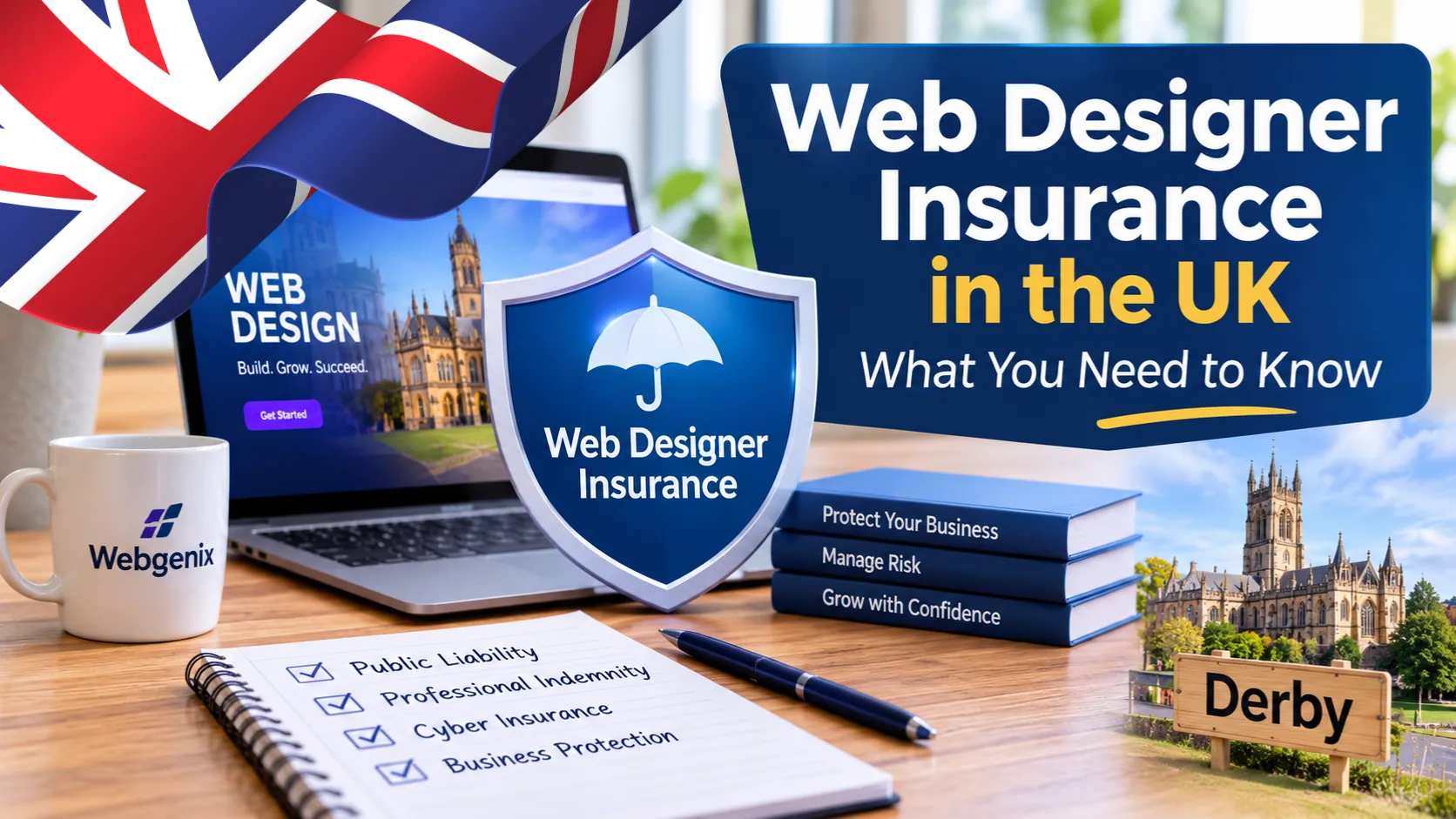
Situations like this explain why web designer insurance is worth understanding before you need it. Web professionals regularly work with websites, customer data, payment systems and business information. When something goes wrong, the financial consequences can be serious, particularly for freelancers and small agencies.
This guide explains the main types of insurance available to UK web designers, what the law requires, common exclusions and what to consider before choosing a policy.
WebGenix provides website design, development and digital marketing services, not insurance products or insurance advice. This article provides general information to help web professionals understand the subject and ask informed questions when speaking to an insurer or broker.
What Is Web Designer Insurance?
Web designer insurance is not a single insurance product. It is a general term used to describe different types of business insurance designed for people who create, develop, maintain or manage websites.
A typical insurance package may include professional indemnity insurance, public liability insurance, cyber insurance and business equipment cover. Employers' liability insurance may also be necessary if you employ staff.
The right combination depends on your services and the risks involved.
For example, a freelance designer who creates website layouts has different responsibilities from an agency that develops ecommerce platforms, manages hosting, maintains databases and integrates payment gateways.
A WordPress developer who regularly installs third-party plugins may also face different risks from someone who builds simple static websites.
Understanding these differences can help you choose suitable protection rather than paying for cover that does not match your actual work.
Do Web Designers Need Business Insurance in the UK?
For most web designers, some types of insurance are optional, while others become legally necessary depending on how the business operates.
Legal Requirements
Employers' liability insurance is generally compulsory when you employ staff in the UK. The policy must provide at least £5 million of cover and come from an authorised insurer.
Businesses that fail to meet the legal requirements can face a fine of £2,500 for every day they are not properly insured.
There are some exemptions, including certain businesses that employ only close family members.
You can find more information on the GOV.UK employers' liability insurance guidance.
Motor insurance is also compulsory if you use a vehicle on public roads for business purposes.
Contractual Requirements
Although professional indemnity insurance is not generally compulsory by law for web designers, many clients require it before agreeing to work with a freelancer or agency.
Larger businesses, public sector organisations and established agencies may request proof of insurance before signing a contract.
Some clients may require £1 million or more in professional indemnity cover, depending on the project and contractual conditions.
If you want to work with these organisations, having suitable insurance may become an important business requirement.
Optional Business Protection
Professional indemnity, public liability and cyber insurance are generally optional for web designers under UK law.
However, they may provide valuable financial protection when problems arise.
Freelancers, sole traders and limited companies should consider their individual responsibilities, financial exposure and contractual obligations before deciding what cover they need.
Types of Insurance for Web Designers and Developers
Different insurance policies protect against different types of business risks. The following are some of the main options for freelance web designers, developers and digital agencies.
1. Professional Indemnity Insurance
Professional indemnity insurance protects against certain claims involving financial losses caused by professional services, advice or mistakes.
For example, imagine you migrate a client's website and incorrectly configure its redirects. The client's organic search traffic drops significantly, affecting enquiries and sales.
The client may claim that your work caused financial damage.
Depending on the policy wording, professional indemnity insurance may cover legal defence costs and compensation for covered claims.
This type of insurance is particularly relevant to web designers, SEO professionals, consultants and developers who provide services to other businesses.
2. Public Liability Insurance
Public liability insurance covers certain claims involving injury to other people or damage to their property caused by your business activities.
For example, you visit a client's office to provide website training and accidentally damage their computer equipment.
Another example is a visitor tripping over equipment at your business premises.
Freelancers who work remotely may have less exposure, but public liability can still be relevant when visiting clients, attending meetings or working from shared offices.
3. Cyber Insurance
Cyber insurance is designed to help businesses respond to certain cyber incidents, including data breaches, hacking and digital security problems.
For example, a security vulnerability on a client's website exposes customer information. The incident may require technical investigation, legal support and communication with affected individuals.
Depending on the policy, cyber insurance may cover investigation costs, data recovery, legal expenses and certain third-party claims.
This is particularly relevant to developers and agencies that manage websites, customer databases, ecommerce platforms or other systems containing personal information.
Businesses can also review the Business.gov.uk guidance on business insurance for further information.
4. Employers' Liability Insurance
Employers' liability insurance protects businesses against certain compensation claims from employees who suffer injuries or illnesses connected with their work.
For example, an employee may develop a work-related injury because of unsuitable working conditions.
If you employ staff, employers' liability insurance is generally a legal requirement in the UK.
The minimum required cover is £5 million.
5. Business Equipment Insurance
Web designers and developers depend on equipment such as laptops, desktop computers, monitors, mobile phones and other technical devices.
Business equipment insurance can protect against specified risks such as theft, accidental damage and loss.
For example, if your laptop is stolen while you are travelling to a client meeting, suitable equipment insurance may help cover the replacement cost.
Check whether your policy covers equipment outside your home or office, as some policies have location restrictions.
6. Business Interruption Insurance
Business interruption insurance can help replace lost income following certain insured events that prevent a business from operating.
For example, a fire or flood damages your office and makes it impossible to continue working from the premises.
This type of cover may be more relevant to established agencies with physical offices than freelancers working remotely.
Comparison of Insurance Types for Web Designers
| Insurance typeWhat it may coverExample situationLegal requirement | |||
| Professional indemnity | Claims involving financial losses caused by professional work | Website migration error | No |
| Public liability | Third-party injury or property damage | Accidental damage during a client visit | No |
| Cyber insurance | Certain cyber incidents and data breaches | Customer information exposed | No |
| Employers' liability | Employee injury or work-related illness | Employee suffers a workplace injury | Generally yes, when employing staff |
| Business equipment | Theft or damage to business equipment | Laptop stolen while travelling | No |
| Business interruption | Lost income following a covered interruption | Office damaged by flooding | No |
The actual protection provided depends on the insurer, policy limits, exclusions and conditions.
Understanding Claims-Made Policies and Retroactive Dates
Professional indemnity insurance is commonly arranged on a claims-made basis.
This means the policy generally needs to be active when a claim is made and notified, rather than simply when the original work was completed.
For example, imagine you build a website in 2024, cancel your professional indemnity insurance in 2025 and receive a claim in 2026.
If you no longer have an applicable policy, you may not be covered.
A retroactive date is another important part of professional indemnity insurance. It identifies how far back the policy may cover previous professional work, subject to its terms and conditions.
When changing insurers, ask whether your existing retroactive date can be maintained without a break in cover.
If you stop trading, you may also want to discuss run-off cover with your insurer. This can help protect against certain claims made after your business activities have ended.
What Can Go Wrong Without Suitable Insurance?
Website projects involve technical responsibilities, business information and client expectations. Even a small mistake can sometimes lead to a financial dispute.
Here are some situations web professionals should understand.
A Development Error Causes Financial Loss
A booking plugin is incorrectly configured, resulting in customers receiving duplicate reservations.
The client may need to refund customers and could claim financial losses from the developer.
Professional indemnity insurance may be relevant, depending on the circumstances and policy wording.
An Ecommerce Checkout Stops Working
A website update causes an e-commerce checkout to stop accepting payments.
The business loses sales while the issue is being investigated and repaired.
If the client alleges negligence, professional indemnity insurance may respond to a covered claim.
Following a proper testing and deployment process is also important. Businesses investing in professional website development services should establish clear project requirements, testing procedures and maintenance responsibilities.
A Customer Data Breach Occurs
A vulnerable plugin exposes customer information stored on a website.
The incident may require technical investigation, security improvements and communication with affected individuals.
Cyber insurance may help with certain incident response costs, depending on the policy.
Businesses must also understand their responsibilities under applicable data protection legislation. The Information Commissioner's Office provides guidance on personal data breaches.
A Business Laptop Is Stolen
A developer's laptop is stolen while travelling.
Business equipment insurance may help cover the cost of replacing the device, while cyber protection may be relevant if sensitive information has been exposed.
Using encryption, secure backups and strong authentication can help reduce the risks.
Accidental Damage During a Client Visit
A developer accidentally damages a client's monitor or other property while working at their office.
Public liability insurance may provide protection against an eligible claim.
A Dispute About Project Delivery
A client believes a website does not meet the agreed requirements and refuses to pay the remaining invoice.
This may become a contractual or professional dispute.
Professional indemnity policies differ in how they handle fee disputes and allegations of negligence, so it is important to understand the specific policy wording.
What Should You Prepare Before Buying Web Designer Insurance?
Before requesting insurance quotations, collect accurate information about your business.
Insurers use these details to assess the risks involved and determine the appropriate premium.
You should prepare:
- Business name, address and website.
- Business structure, such as sole trader or limited company.
- Services offered, including web design, development, SEO, hosting and maintenance.
- Annual turnover and expected future revenue.
- Number of employees and subcontractors.
- Whether you work from home, an office or client premises.
- Types of websites you build, including WordPress, ecommerce and custom applications.
- Whether you manage customer data or payment-related systems.
- Previous insurance claims or circumstances that may lead to a claim.
- Existing insurance policies and renewal dates.
- Any insurance limits required by your client contracts.
Providing accurate information is essential. If you offer hosting, website maintenance or payment integrations, make sure the insurer understands these activities.
Questions to Ask an Insurance Provider
Before choosing a policy, ask the insurer or broker:
- Does the policy cover the exact services my business provides?
- Are subcontractors included in the cover?
- Does professional indemnity cover website development errors?
- Does cyber insurance include data breach response costs?
- What is the excess for each claim?
- What is the maximum amount the insurer will pay?
- Are legal defence costs included within the policy limit?
- Does the policy cover previous work?
- Is run-off cover available if I stop trading?
- What circumstances or exclusions could result in a claim being rejected?
You should also check that the insurer or broker is authorised through the FCA Financial Services Register.
How Does an Insurance Claim Work?
The claims process depends on the insurer and type of policy, but it generally follows several steps.
1. Notify the insurer early.
Contact your insurer or broker as soon as you become aware of a claim or an incident that could potentially lead to one.
Do not wait until a dispute becomes more serious.
2. Collect the relevant documents.
Keep copies of contracts, project scopes, invoices, emails, change requests and other communication with the client.
These records help establish what was agreed and what work was completed.
3. Preserve technical evidence.
For web development projects, useful evidence may include website backups, screenshots, server logs, version control records and deployment history.
4. Follow the insurer's instructions.
The insurer may appoint legal representatives or claims specialists to review the situation.
Follow their guidance before responding to formal allegations or making settlement offers.
5. Understand your policy limits.
Check the excess, maximum cover amount and whether legal costs are included within the policy limit.
6. Avoid admitting liability without advice.
Do not accept responsibility or offer compensation before discussing the situation with your insurer or legal adviser.
Common Insurance Mistakes Web Designers Should Avoid
Choosing business insurance based only on price is one of the most common mistakes.
A cheaper policy may not cover the services you provide or the type of claim you are concerned about.
Other mistakes include:
- Choosing public liability when professional indemnity is needed.
- Failing to disclose hosting, maintenance or ecommerce services.
- Ignoring exclusions and policy conditions.
- Selecting a cover limit that does not meet client contract requirements.
- Cancelling professional indemnity cover without considering previous work.
- Failing to notify an insurer within the required period.
- Assuming every cyber incident is automatically covered.
- Not checking whether business equipment is insured outside the office.
Always read the policy documents carefully and ask questions if any part of the cover is unclear.
Insurance Considerations for Web Designers in Derby
Derby has businesses across manufacturing, engineering, retail, hospitality and professional services. Many of these organisations rely on websites to generate enquiries, communicate with customers and manage online services.
For local web designers and development agencies, this creates different responsibilities depending on the type of website being built.
For example, an agency developing a business website may have different risks from a developer creating an ecommerce platform or a customer portal.
Businesses commissioning complex website projects may also include insurance requirements in their supplier agreements.
Web designers working across Derby, Nottingham, Leicester and the wider East Midlands should consider whether their insurance covers client visits, equipment used outside the office and the full range of services they provide.
Cybersecurity is another important consideration. The UK Government's Cyber Security Breaches Survey 2025/2026 reported that 43% of UK businesses identified a cyber breach or attack in the previous 12 months.
This highlights why website security, regular updates, reliable backups and appropriate data protection practices matter to both website developers and their clients.
Benefits of Having Suitable Business Insurance
Suitable business insurance can provide several benefits for freelancers and digital agencies.
It may help protect business finances against covered claims, including certain legal defence costs and compensation payments.
It can also make it easier to meet client contract requirements, particularly when working with larger organisations that request proof of insurance.
Having appropriate cover may provide additional confidence when taking on complex projects involving ecommerce systems, customer information and ongoing website maintenance.
For growing agencies, reviewing insurance requirements as the business expands is also important. Employing staff, taking on larger contracts and offering additional services can all change the type of cover required.
Insurance does not replace good business practices, but it can form an important part of managing professional risks.
Frequently Asked Questions
Is professional indemnity insurance compulsory for web designers in the UK?
No. Professional indemnity insurance is not generally a legal requirement for web designers. However, some clients and organisations require it as part of their contracts.
Does a freelance web designer need public liability insurance?
It is not generally compulsory by law. However, it may be useful if you visit clients, attend meetings or work from shared business premises.
Does web designer insurance cover WordPress website errors?
Professional indemnity insurance may cover certain claims arising from errors in professional work, including WordPress development. However, the actual protection depends on the policy wording and exclusions.
Does insurance cover cyberattacks?
Cyber insurance is designed to cover certain cyber incidents, including data breaches and hacking. However, not every policy covers every type of attack or loss.
Do web designers need employers' liability insurance?
Generally, yes, once they employ staff. UK employers must usually have at least £5 million of employers' liability cover from an authorised insurer.
Can I claim if a website development project goes wrong?
You can notify your professional indemnity insurer if a client makes a claim alleging financial loss caused by your professional work. Whether the claim is covered depends on the facts and policy terms.
Does insurance cover website work completed before buying a policy?
It may do if the policy includes an appropriate retroactive date. Check this carefully with your insurer, especially when changing providers.
How much does web designer insurance cost in the UK?
There is no single fixed price. Costs depend on turnover, services, cover limits, claims history, business size and the type of risks involved. Comparing quotations from different providers can help you understand the available options.
What is the difference between professional indemnity and public liability insurance?
Professional indemnity covers certain financial-loss claims resulting from professional work or advice. Public liability covers certain claims involving injury to other people or damage to their property.
Can a web developer get insurance as a sole trader?
Yes. Many UK insurers offer business insurance to sole traders and freelancers. The appropriate policy depends on the services provided and the risks involved.
Conclusion
Web designer insurance is an important subject for freelancers, developers and digital agencies working in the UK.
Employers' liability insurance is generally the main legal requirement when a business employs staff. Professional indemnity is often important for businesses providing web design and development services, particularly when clients require proof of cover.
Cyber insurance, public liability and equipment protection may also be worth considering depending on how the business operates.
Before choosing a policy, understand your responsibilities, check the exclusions, compare cover limits and make sure the insurer knows exactly what services you provide.
Taking time to understand these details can help you make better business decisions and prepare for unexpected situations.
For businesses looking to develop, maintain or improve their online presence, WebGenix provides professional website development services and WordPress development solutions to support different business requirements.

Comments (0)
No comments yet. Be the first to share your thoughts!